Curcumin Bioavailability: A Guide for Supplement Formulators
Curcumin has an unusual commercial profile. It is one of the most intensively researched botanical compounds in the world, one of the most recognised by consumers, and one of the most difficult to deliver in a form the body actually absorbs. Standard curcumin powder, even at 95% curcuminoid content, is poorly bioavailable — which means a formulation decision made on extract purity alone can produce a product that is technically compliant and functionally questionable.
Why unformulated curcumin is difficult
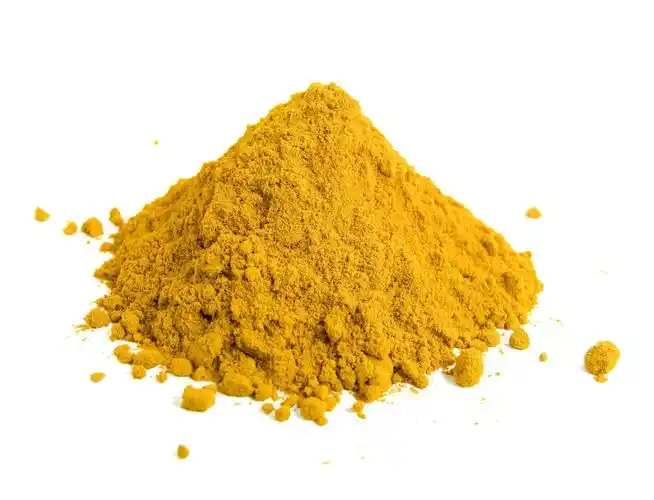
Three properties combine to create the problem. Curcumin is strongly lipophilic and dissolves only marginally in water, which limits how much can be presented to the gut in dissolved form. Material that is absorbed is extensively conjugated in the gut wall and the liver, producing glucuronide and sulfate metabolites that are cleared quickly. And curcumin degrades with light, oxygen and alkaline pH, and interacts with metal ions, so in a liquid format both potency and colour are affected.
Every effective delivery system attacks one or more of these three. That is the lens through which to evaluate the offers you receive.
The delivery systems compared
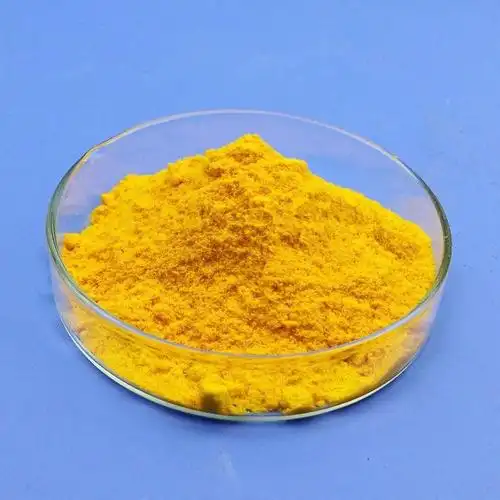
The baseline against which everything else is measured is standard 95% curcuminoid powder. It uses no delivery mechanism at all, its cost is the lowest of the options, its declaration is the simplest, and it is stable as a dry powder. What it does not do is absorb well, which makes it unsuitable as the basis for a standalone claim of superior absorption — though it remains an entirely defensible choice where the product brief is a botanically standardised curcumin product rather than an absorption-enhanced one.
Co-dosing piperine, an extract of black pepper, works by inhibiting glucuronidation in the intestinal wall and the liver. The increase reported in the literature is substantial, but it is also highly variable between individuals. The advantages are that it is cheap, simple and already well known to formulators; the costs are that it puts a second ingredient on the label, brings a pepper taste, reduces formulation flexibility, and produces a result that cannot be reliably predicted for a given consumer.
A phytosome, or phospholipid complex, binds the curcuminoids to phospholipids, which improves dispersion and the interaction with the gut. The improvement over unformulated powder is typically several-fold and reasonably reproducible, which is why the approach is well documented and widely used. It suits solid dosage forms and supports a clean-label position. Its limitations are a higher cost per kilogram of curcuminoids, and the fact that it is not a clear answer for transparent beverages.
Micellar or surfactant-solubilised liquids present the curcuminoids in micelles for direct absorption, and among the systems described here they are associated with the highest enhancements reported. They are excellent for liquid fills and softgels, with good dose-to-volume efficiency. The trade-off is that they require a formulated liquid system, and the carriers have to be declared.
Nano and submicron particle systems work by reducing particle size to increase the dissolution rate, and they deliver a high enhancement. They function in both powder and liquid and can be made water-dispersible. Their weakness is sensitivity — to aggregation and to processing — which means the particle size distribution should be verified as received and re-tested after your own process has been applied.
A water-dispersible or self-emulsifying powder forms an emulsion when it is reconstituted. The enhancement is good and consistent with normal powder handling, and the format is ideal for sachets, sticks and dry blends because no liquid filling line is required. The considerations are the carrier and emulsifier declaration, and the fact that clarity in solution may be limited.
The honest conclusion: the “best” system does not exist in the abstract. It depends on your dosage form, your declared curcuminoid content, your label policy, and your cost target.
Choosing by dosage form
The choice follows from the finished format. For hard capsules, a phytosome or a standardised powder combined with an absorption-enhancing co-ingredient is the usual route, constrained by capsule fill weight and flow, and by the practical ceiling set by the capsule size you have chosen. Softgels suit micellar or oil-suspension systems, where the constraints are compatibility with the shell and migration or bloom over shelf life. Sachets and stick packs suit a water-dispersible powder, with reconstitution behaviour, taste masking and particle settling as the variables to control. Tablets call for a phytosome or a compactable enhanced powder, limited by compressibility and by dose uniformity at commercial speeds.
Outside solid dosage forms, a ready-to-drink beverage needs a micellar or transparent nano system, and the constraints there are clarity, the colour contribution that curcumin makes, and acid stability. A gummy requires an emulsified or micellar system compatible with the gummy cook, where the thermal load during cooking matters and pectin and gelatin systems behave differently from each other. For functional food and bakery applications, a standardised powder on a compatible carrier is usually the practical route, limited by cost and by the yellow colour in light-coloured matrices.
Two warnings come up repeatedly in practice. The first is that curcumin is a colourant before it is anything else: in a light-coloured matrix it will dominate the appearance, which may be an opportunity — the same molecule family is used as a colour additive in some markets — or a problem, depending on the product. The second is to test the delivery system after your process, not before. A nano-emulsion that performs beautifully in the supplier’s bench data can aggregate when your line heats it, and a water-dispersible powder can fail to reconstitute after twelve months in a sachet. Retain samples and retest at end of shelf life.
What to verify on the specification and CoA
Purity percentages are the least informative part of a curcumin document, so identity is where to start. The specification should state the botanical source and plant part (Curcuma longa rhizome); the total curcuminoid content and the breakdown between curcumin, demethoxycurcumin and bisdemethoxycurcumin; the assay method and the basis the result is expressed on; and, for formulated systems, the curcuminoid load expressed as a percentage of the finished complex or liquid rather than the words “curcumin extract” on a label line.
Formulation-specific data then has to be supplied, because a delivery system cannot be assessed without it. That means the delivery system type stated clearly, together with the carrier and emulsifier list; the particle size distribution for nano and micronised systems, with the measurement method named; dispersion behaviour in the intended reconstitution medium, supported by a documented test; and a colour-space reading in L*, a* and b* terms wherever appearance matters to the product.
On the safety and compliance side, the documentation should include a heavy metals panel with its method — typically ICP-MS — and limits stated against a recognised reference; a pesticide multiresidue screen with the panel size and detection limits disclosed; a residual solvents statement against a recognised classification; a microbiological profile covering total plate count, yeast and mould and specified pathogens; and statements on allergens, GMO status and radiation treatment.
Finally, stability: accelerated and real-time data, including potency retention and, for liquid systems, physical stability, together with the recommended storage and packaging conditions. Without those two items the specification describes what the material is on arrival but not whether it will still be that material at end of shelf life.
Dosage and label arithmetic
A frequent source of label mismatch is confusing extract weight with curcuminoid weight. A 500 mg dose of a 95% curcuminoid extract delivers roughly 475 mg of curcuminoids; the same 500 mg of a formulated complex containing 20% curcuminoids delivers roughly 100 mg. If your label claim or your internal specification is written in terms of curcuminoids, the extract-to-complex comparison must be made on that basis, not on the weight in the capsule.
Two rules prevent most label and specification disputes. State the basis in writing — “curcuminoids” versus “extract” versus “complex” — on the specification, the label copy brief and the stability protocol, so that everyone is comparing the same quantity. And apply your real overage, because curcumin degrades with oxygen and light and a formulation that starts at exactly the target often finishes shelf life below it; build the overage from measured stability data rather than from a rule of thumb.
Cost per unit dose
As with most botanical specialties, comparing price per kilogram is misleading. The comparison to build is cost per kilogram of material divided by its curcuminoid content, multiplied by the dose required to hit your target, multiplied by one plus your overage.
Then add the costs that differ by system: liquid filling versus powder blending, additional carrier declaration and label review, the stability testing programme, and — for absorption-enhanced systems that are often supplied under licence — any trademark or licensing terms that restrict how you can describe the ingredient.
There is no health claim in that statement and none is intended here. This article is about the formulation problem: how do you get a defined quantity of curcuminoids into a finished format in a way that your quality team can document?
Frequently Asked Questions
Is standard 95% curcumin powder still worth using?
It remains the lowest-cost route and is entirely reasonable where the product brief is a botanically standardised curcumin product rather than an absorption-enhanced one. The important discipline is to make that choice deliberately and to describe the product accurately, not to imply enhanced absorption that the formulation does not deliver.
Does adding black pepper extract always work?
It is a well-established approach with documented effect, but it is subject to considerable between-person variability and it locks a second ingredient into your formulation and label. Where label simplicity matters, a formulated single-ingredient delivery system may be preferable.
What is the biggest hidden risk with nano and micellar systems?
Physical instability after your own processing, and unverifiable particle size claims. Ask for the measurement method and the distribution, and retest after your process, not only as received.
Can curcumin be used in a clear beverage?
Micellar and transparent nano systems can achieve acceptable clarity at low doses, but curcumin contributes yellow colour regardless. If clarity and a neutral appearance are required, curcumin is usually the wrong active for the format.
What should I do if a supplier cannot provide particle size, carrier or stability data?
Treat it as a qualification failure rather than a documentation gap. Formulated delivery systems cannot be assessed without that information, and no amount of price advantage compensates for a stability failure discovered after launch.
Formulate with DayNatural
DayNatural supplies curcumin in standardised curcuminoid grades and in application-ready formulated formats, supported by third-party testing through our partnership with Mérieux NutriSciences. If you are evaluating delivery systems, our R&D team can supply comparative samples and the documentation needed to build a defensible specification.