Lutein vs Zeaxanthin: Ratios, Forms and Formulation Guide
Lutein and zeaxanthin are the two carotenoids most often specified together, and the two most often confused on a specification sheet. Both come from the same commercial source — marigold (Tagetes erecta) — and the two can appear in a formulation in ways that are technically very different while carrying almost the same name on the label.
Getting this wrong has consequences. A specification written as “20 mg lutein” can be satisfied by materially different quantities of active depending on whether the material is free lutein or lutein ester. And a zeaxanthin component specified on the wrong basis can miss the intended ratio by a factor of two.
The two molecules and where they come from
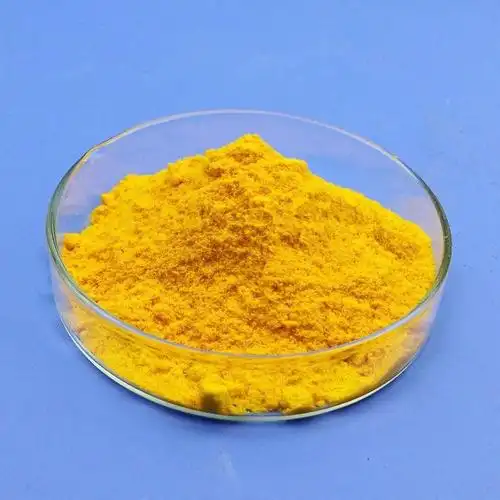
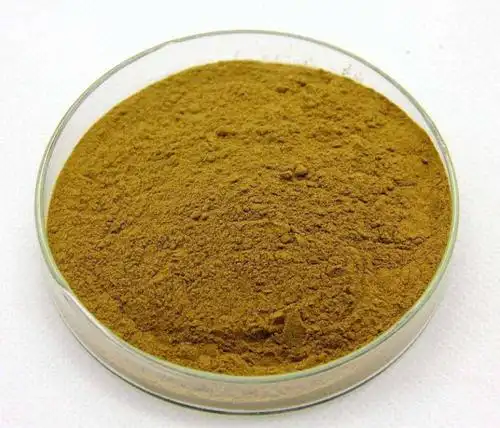
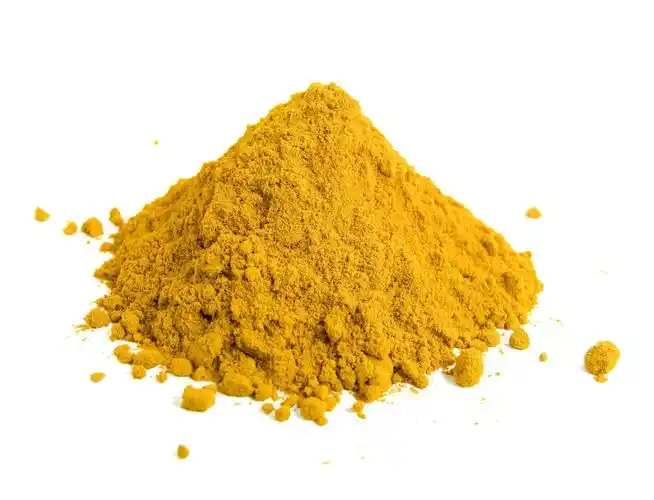
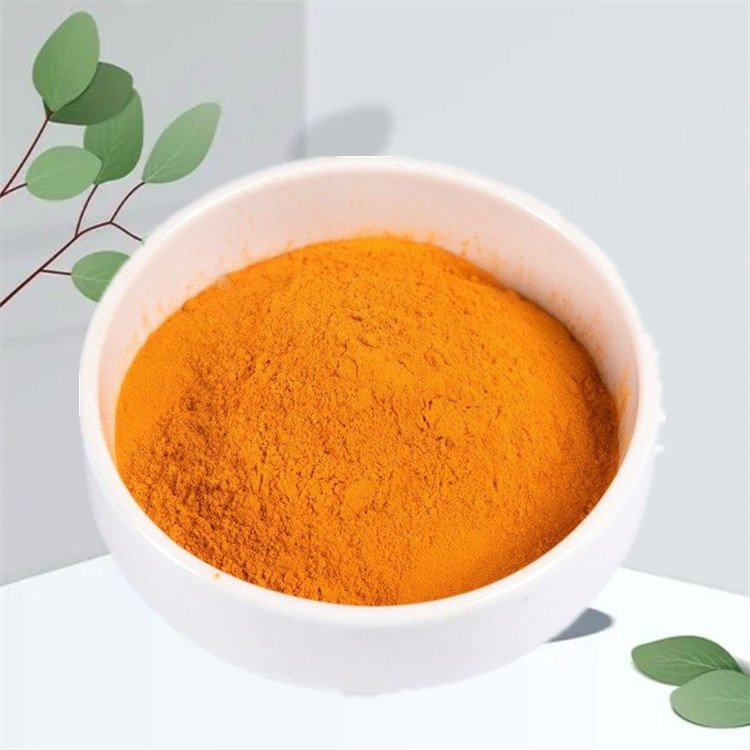
Both are xanthophyll carotenoids, and structurally the only difference between them is the position of one double bond. Commercially, both are obtained principally from marigold (Tagetes erecta) oleoresin, with zeaxanthin also produced by isomerisation or conversion from lutein. In the plant, lutein is the major carotenoid and zeaxanthin the minor one, typically present at roughly one fifth of the lutein level — which is where the familiar blended ratios come from. On the optical isomer side, lutein occurs naturally in the (3R,3’R) form, and food-grade zeaxanthin from marigold is typically the same (3R,3’R) form, whereas a synthetic route yields a different isomer profile. In appearance both are yellow-orange, with zeaxanthin marginally more orange.
Because marigold delivers the two in a naturally weighted ratio, a marigold-derived extract is an efficient way to supply a combined dose without blending two separate raw materials — provided the ratio on the specification matches what your product requires.
The single most important number: ester versus free
Marigold oleoresin contains lutein predominantly in esterified form — lutein bound to fatty acids. To produce free lutein, the oleoresin goes through saponification, which hydrolyses the esters and frees the carotenoid.
This creates the conversion problem that causes most specification disputes. Lutein esters refer to the esterified molecule including the fatty acid portion, so only part of the total weight is lutein itself, whereas free lutein refers to the carotenoid alone, after saponification. As a working figure, lutein esters contain approximately half their weight as free lutein, so roughly 20 mg of lutein esters corresponds to roughly 10 mg of free lutein. The exact factor varies with the ester profile and should always be taken from the supplier’s analytical data rather than assumed.
Three consequences follow in practice. Always state the basis on the specification, because “lutein, expressed as free lutein” is unambiguous while “lutein 20%” is not. A price per kilogram comparison between an ester product and a free lutein product is meaningless until both are converted to the same basis. And label claims in different markets use different conventions — some markets accept ester-based declarations and others expect free-form equivalence — so confirm the position with your regulatory team before the artwork is signed off.
The ratio question
The combined lutein-plus-zeaxanthin dose is what most formulations are built around, and the widely referenced reference point comes from the AREDS2 trial, which used 10 mg of lutein and 2 mg of zeaxanthin daily. That 5:1 relationship is the origin of the very common 5:1 market convention.
Three practical notes apply. The 5:1 convention is a formulation convention, not a regulatory requirement; it is a reasonable default because it approximates the natural composition of marigold, which keeps sourcing and cost simple. Some formulations specify different ratios — for example 4:1, or a three-component blend including meso-zeaxanthin — and these require either separate raw materials or isomerised products, both of which raise cost and complexity. And whatever ratio you choose, specify the analytical basis for each component separately and require the assay to be reported per component rather than as a combined total, because a combined total can hide a ratio that has drifted.
Also worth knowing: in the European Union, lutein and zeaxanthin are addressed as colour additives within the additive framework, and the health-claim landscape around eye-related benefits is tightly regulated — the EU has not authorised the claims that are common in some other markets. Formulate and label according to the destination market’s rules; in the United States, dietary supplement structure/function claims follow a different regime. This is a claim-strategy question rather than a technical one, but it should be settled before product development is committed.
Choosing the physical form
The same carotenoid can be offered in forms with very different behaviour. Free lutein, saponified and standardised on a carrier, is a powder suited to tablets, capsules, dry blends and sachets, where the things to watch are dispersion in water and colour bleed into the matrix. A beadlet or water-dispersible powder disperses the carotenoid in a protective matrix to form cold-water dispersible particles; it suits beverages, instant powders and transparent or translucent systems, and the point to verify is that the dispersion survives your process and your reconstitution step. An oil suspension disperses the carotenoid in vegetable oil for softgels, oil-based liquid fills and lipid-phase food, where sedimentation has to be managed and a defined dispersion plus a stability statement should be required.
Two further options sit outside that group. Lutein esters, supplied as oil or powder, are the naturally esterified extract with a higher fat association; they are the right choice where an ester-based declaration is used or fat solubility is desirable, with ester-to-free conversion on the label and the oxidative stability of the oil as the considerations to manage. Marigold oleoresin is the upstream extract before further standardisation, used in cost-driven applications and as a starting point for further processing; it is highly pigmented and viscous, so dosing accuracy has to be controlled.
Because carotenoids are oxidation- and light-sensitive, the physical form is largely a protection strategy. Antioxidant systems, encapsulation matrices and packaging all exist to serve one purpose: keeping the molecule intact until it is consumed. Ask for retention data under real storage conditions, not only as-manufactured assay values.
What to require on the specification sheet
Identity and assay come first. The specification should state the botanical source and the plant part, plus the isomer profile where it is relevant; the total carotenoids with lutein and zeaxanthin reported separately; and an explicit statement of whether the values are ester-based or free-form. The analytical method should be named and referenced, together with whether the results are expressed on a dry or an as-is basis.
The physical and sensory items come next, because a carotenoid specification is incomplete without them: the carrier or oil type, particle size and dispersion behaviour for powder and beadlet forms, a colour-space reading wherever appearance matters, and a statement of solubility and dispersion in the intended application medium.
Stability and safety follow. Ask for accelerated and real-time retention data with the recommended storage, packaging and shelf life; a heavy metals panel with its method; a pesticide multiresidue screen with the panel size disclosed; a residual solvents statement; and a microbiological profile. On compliance, the documentation should carry allergen, GMO and radiation-treatment statements, organic, Halal and Kosher certificates where claimed, and the country of origin.
One further point on cost: because lutein and zeaxanthin are both extracted from the same marigold supply chain, their pricing is correlated. A specification that flexes the ratio within a limited range — rather than fixing it to an unusual value — will typically be cheaper and easier to source over a multi-year programme.
Application fit
The recommended form follows from the finished format. A two-piece capsule takes free lutein or an ester powder, constrained by fill weight and flow and by the dose per capsule. A softgel takes an oil suspension, where shell compatibility and dose-to-volume are the limits. A tablet takes a standardised powder, limited by compressibility and colour uniformity. A sachet or stick pack takes a water-dispersible powder, where reconstitution clarity and the taste contribution matter. A ready-to-drink beverage calls for a cold-water dispersible beadlet, with clarity, ringing and thermal stability through pasteurisation as the variables to control. A gummy needs an emulsified or dispersible form, against the thermal load in the cook and colour migration between layers. And a fortified food typically takes an oil suspension or a powder, limited by the fat content of the matrix and the colour impact on a pale product.
Frequently Asked Questions
If a label says 20 mg lutein, is that ester or free?
It depends on the market and on the manufacturer’s chosen basis. The only reliable answer is the specification sheet’s stated basis. Where it is not stated, ask — and expect a documented analytical basis rather than a verbal assurance.
Can I simply substitute free lutein for lutein esters at the same milligram dose?
No. The two are on different weight bases, and the active content differs substantially. Substitution must be recalculated on a common basis and confirmed by assay.
Do I need a separate zeaxanthin raw material?
Not necessarily. Marigold-derived extracts naturally carry both carotenoids, so a 5:1 style blend can often be delivered from a single standardised material. Where a different ratio is required, a separate zeaxanthin component is usually needed.
Why does the colour change between production lots?
Carotenoids are extracted from an agricultural raw material and are oxidation-sensitive. Lot-to-lot variation in hue and intensity is normal. If visual consistency matters, specify a colour range and require a colour-space reading per lot.
What is the biggest risk in this category?
Mismatch between the stated basis and the actual basis — a specification written in free lutein, satisfied with an ester material, and signed off by a quality team under time pressure. Writing the basis explicitly into the purchase specification, and into your incoming-goods test protocol, eliminates it.
Source lutein and zeaxanthin with confidence
DayNatural supplies free lutein, lutein esters and zeaxanthin from marigold extract in powder, oil suspension and application-ready forms, each with an explicit analytical basis on the specification sheet and third-party verification through our Mérieux NutriSciences testing programme.