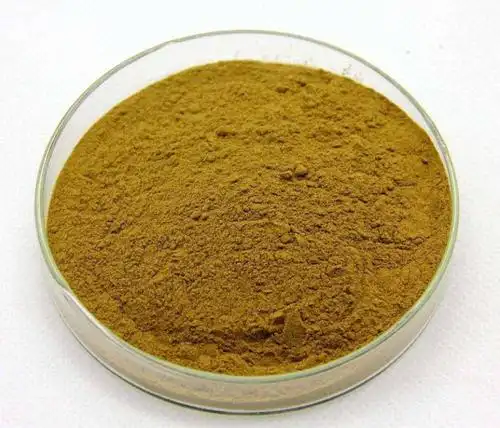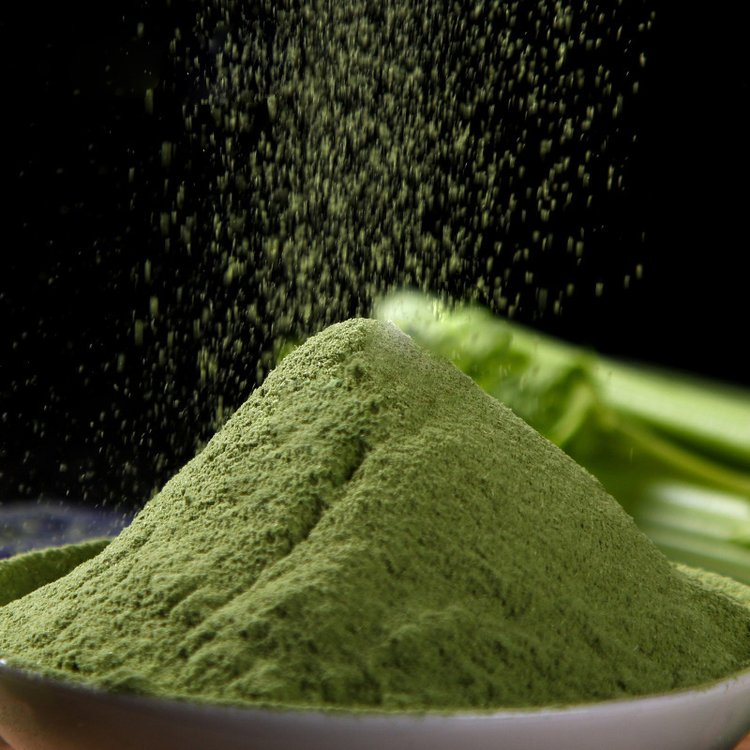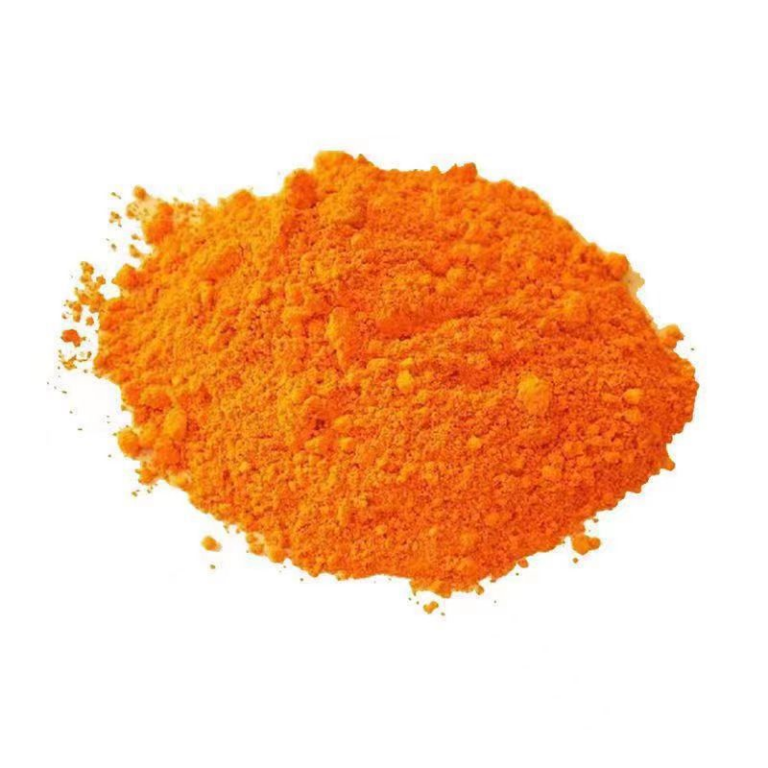
Natural Green Food Colourants: Chlorophyll, Chlorophyllin and Blends
Green is the colour that most often ends up as a compromise, and the reason is structural rather than technical. Where the other colours have a family of materials that can each be judged on its own merits, green is served by one true colorant family, one blending strategy, and a set of plant powders that deliver colour as a side effect of being an ingredient. Those three routes produce visibly different results, and they carry different labelling consequences. This guide sets out what each route actually delivers, why green drifts to olive, blue or khaki in finished products, and what to settle before a sample is requested.
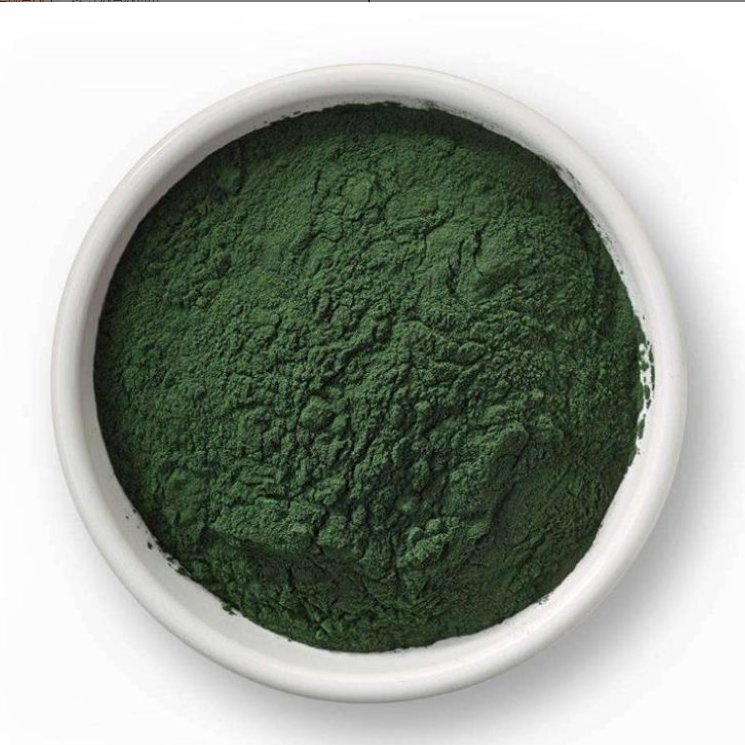
The three routes to a natural green
The first route is the chlorophyll family, which is the only group of materials that exists in commerce for the purpose of being green. It covers the natural pigment and its stabilised copper complex, and it is the route a formulator takes when a precise, repeatable green is the objective.
The second route is a blend: a natural blue combined with a natural yellow to make a green. This is what most commercial “natural green” actually is, because the blue and yellow families are broader, more available and often cheaper than a single green. It works, but it inherits the weaknesses of both components, and that is where most of the drift in finished products originates.
The third route is a green plant powder — matcha, spinach, alfalfa, nettle — used as much for its story and its nutritional content as for its colour. Colour here is a plant property rather than an engineered figure, and it arrives with flavour, fibre and a use level that is usually an order of magnitude above a colorant.
Chlorophyll and copper chlorophyllin are not the same material
Chlorophyll is the pigment itself. In its native form it is oil-soluble, it is unstable, and it degrades into an olive-brown material when the central magnesium atom is displaced. Those properties are the reason native chlorophyll is a difficult ingredient to use as a colour, and the reason the material that actually dominates the market is a derivative.
Copper chlorophyllin is that derivative. Replacing the magnesium with copper produces a molecule that resists the acid-driven degradation step and that can be made water-soluble, which is why it is the form used in beverages, confectionery, sauces and anything with a low pH. The two are therefore not interchangeable, and a specification that says only “chlorophyll” is not telling you which one you have been quoted. They are also listed separately in the additive frameworks that regulate them, and the permitted uses are not the same in each market, so the family is one where the current text of the destination’s rules has to be checked rather than recalled. Treat the family as two materials with one name.
Where green usually comes from: a blue plus a yellow
If you ask a formulator how a natural green was achieved in a commercial product, the honest answer is frequently that it was blended. A blue from spirulina or butterfly pea is combined with a yellow from turmeric or a carotene, and the ratio is tuned until the hue lands in the right place.
The attraction is availability and cost. The complication is that the blend is only as stable as its least stable component. If the blue fades faster than the yellow, a green product drifts towards yellow-green and then towards a flat khaki; if the yellow fades first, the colour moves towards blue and the product reads mint or teal. The two components also have to be compatible in phase: a water-dispersible blue with an oil-soluble yellow will not give a clean green in an aqueous system, and the result is usually a speckled or dull appearance rather than a mismatch of hue.
There is a pH dimension as well. Blue systems based on anthocyanins shift their hue with pH, and spirulina-derived blue has its own narrow working range, so the blend that matched in a buffered pilot can read differently after a small formulation change. When green is built from two materials, the specification has to cover both of them, and the stability work has to be done on the blend rather than on the components separately.
Green from plant powders, and what the powder brings with it
Matcha is the best-known example of a plant powder used for colour, and it deserves a precise description because it is often compared to colorants on the wrong terms. The colour of matcha is a function of how the crop was grown, how quickly it was steamed after harvest, how it was dried, how finely it was milled and how it has been stored since. Shading the plant before harvest raises the chlorophyll content, steaming inactivates the enzyme that would otherwise degrade the pigment, and a fine particle size increases the colour intensity simply because more surface is available to reflect light. Two matcha powders of the same grade can therefore differ in colour, and the difference is a harvest and processing property rather than a specification failure.
Spinach, alfalfa and nettle powders behave the same way, and the drying method matters more than buyers expect: a gentle low-temperature dry retains a green that a harsher dry turns olive. The attraction of this route is that the material is declared as an ingredient rather than as a colour additive, which is exactly what a clean-label brief is looking for. The cost is that the use level is driven by taste and by the powder’s other components rather than by colour strength, so the load in the formula becomes the constraint, and the colour varies with the crop.
What heat, acid and light do to green
Green fails in a characteristic order, and knowing the order tells you which control to reach for. Acid and heat act on the same point in the molecule: the central metal atom is displaced, the pigment becomes pheophytin, and the colour shifts from green to olive and then to brown. That is why a green colour in a low-pH beverage is a different technical problem from a green colour in a neutral or mildly acidic system, and why the stabilised copper form exists at all.
Light and oxygen act separately, through photo-oxidation, and they fade a green towards a paler, greyer tone without the olive shift. In a transparent pack with a long ambient shelf life, this is usually the dominant route and the one that a standard stability report generated in the dark will not reveal. Thermal load during processing compounds both: the longer the material is held hot, the more the pigment is committed to degradation before the shelf life has even started.
The practical controls follow from that. Keep the thermal load as short as the process allows. Work at the highest pH the formulation can tolerate where the material permits it. Protect the pack from light rather than relying on the formula. Use an antioxidant system where the regulations for the market allow it. And where the finished product has a long ambient life and a clear pack, accept that the colour choice is effectively made by the packaging and test under real retail lighting before committing.
What a colour figure means for green
Green has an additional measurement problem of its own. A chlorophyll content figure tells you how much of the pigment is present, but not what the material looks like, because the visual hue depends on the balance between the green pigment and the yellow and blue components surrounding it. A colour value tells you how strong the preparation is in a defined medium, and it is only comparable with another figure measured in the same medium and at the same concentration. Neither figure converts into the other.
For a blend, the situation is worse, because the quotation may carry a figure for each component and nothing for the blend. The only comparison that survives is a measurement taken in your own medium at your own use level and, where the pack is transparent, read as a hue rather than as an intensity. Ask for the reading in the system you are actually colouring.
Label wording, and the three ways green can be declared
The declaration follows the route, and the three routes give three different statements. A copper chlorophyllin preparation is declared as a colour, under whichever naming convention the destination uses. A plant powder such as matcha is declared as an ingredient, with its own position in the ingredient list. A blend of two colorants is declared as two colours, which is a longer statement than most brands expect when they brief a “natural green”.
This matters at the artwork stage rather than at the formulation stage, because the claim the brand wants and the declaration the formula produces have to agree. A product coloured with two additives cannot honestly claim that all of its colour comes from plants, and a product coloured only with a plant powder will carry a much higher load of that powder. Settling which statement the label has to carry is the cheapest way to choose between the three routes, and it is much cheaper before the artwork is designed than after.
What to write into the purchase specification
State which route the material belongs to and identify it unambiguously — the copper complex or the native pigment, the named plant powder, or both components of a blend. State the solubility direction, since water-soluble, oil-soluble and water-dispersible forms of the same family are not substitutes. State the colour figure together with the method and the medium in which it was measured, or the pigment content and its method, and be explicit about which of the two you are buying against.
State the carrier and emulsifier system for any formulated dispersion, because those components carry their own declaration. State the pH range and the thermal process the material has been tested against, and require the supporting data rather than a statement of suitability. State the intended market, because the permitted lists differ and the choice of family can depend on that answer alone. And state the storage conditions and shelf life, because a green pigment loses ground in storage long before it loses ground in the finished product.
Frequently Asked Questions
Is chlorophyllin the same thing as chlorophyll?
No. Chlorophyll is the natural pigment, which is oil-soluble and degrades to an olive-brown tone when its central magnesium is displaced. Copper chlorophyllin is a derivative in which that metal has been replaced, which makes the material more resistant to acid and allows a water-soluble form. They are listed separately in the regulatory frameworks and they are not interchangeable in a formula.
Can I make a natural green by blending a natural blue and a natural yellow?
Yes, and it is how most commercial natural greens are made. The blend inherits the weaknesses of both components, so the hue drifts towards whichever one fades faster, and the two have to be compatible in phase. The stability work has to be done on the blend, not on the components separately, and both components have to be declared.
Why does my green turn olive or brown?
Because the pigment’s central metal atom has been displaced, and acid and heat both drive that reaction. It is the characteristic failure of the chlorophyll family and the reason the stabilised copper form exists. Where the system is acidic, choose the copper complex; where it is not, reduce the thermal load and the holding time before reaching for a different material.
Can I use matcha as a colour instead of a colour additive?
You can, and it will be declared as an ingredient rather than as a colour, which is often the point. But the colour is a crop and processing property rather than an engineered figure, it varies between lots, and the use level is set by taste and by the powder’s other components. It is a formulation decision, not a substitution.
Which natural green survives a long ambient shelf life?
The stabilised copper complex is the most robust of the family and the usual answer where a long life at ambient temperature is required. Blends and plant powders are more exposed, particularly in a transparent pack, where light becomes the dominant degradation route. Where the pack is clear and the shelf life is long, treat the packaging as part of the colour decision and confirm it in a real-time study.