
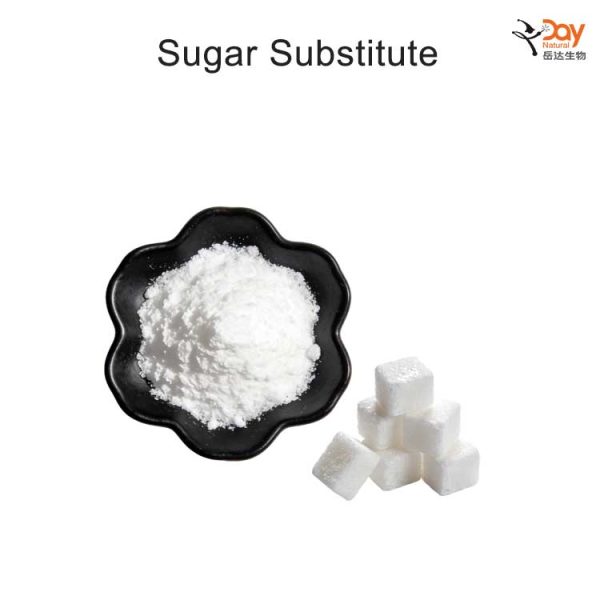
Sugar Substitute
Sugar substitutes are sweet substances that replace sucrose (white sugar) and provide sweetness but with lower or almost no calories. Mainly used in sugar-free foods, beverages, health products, and sugar control products, suitable for people who need to control weight and blood sugar.
| Product Name | Sugar Substitute |
| Form | Powder |
| Main ingredient | Erythritol, maltitol, stevia extract, licorice extract, polyglucose |
| Appearance | White crystalline powder |
| Solubility | Soluble in water |
| Packaging | 25KG/barrel |
Extra Features
- 25 Years Manufacturer
- Customized Formula
- Premium Quality
- Worldwide Shipping
- Timely Delivery
The Benefits of Sugar Substitutes
- It is low in calories and unlikely to cause weight gain. It is significantly sweeter than white sugar, so only a tiny amount is needed—adding virtually no calories.
- It does not significantly raise blood sugar levels, making it suitable for blood sugar management—ideal for both diabetics and individuals looking to control their sugar intake.
- It does not harm the teeth, reduces the risk of cavities, and is not broken down by oral bacteria to produce acid.
- It exhibits excellent stability and high heat resistance, making it suitable for use in beverages, snacks, baked goods, and health supplements.
- Satisfy your craving for sweets without the guilt. If you want something sweet but are worried about weight gain or sugar intake, using sugar substitutes is the most convenient solution.
Are artificial sweeteners safe?
- As long as a sugar substitute is legitimate and complies with national standards, it is safe. Major authoritative bodies worldwide—including the FDA, EFSA, JECFA, and China’s National Health Commission—have all approved their use and affirmed their safety.
- Does not cause cancer or diabetes: Currently, there is no reliable evidence demonstrating that compliant sugar substitutes cause cancer or lead to diabetes.
- Suitable for Special Populations
- Diabetics: Suitable for use.
- Pregnant Women and Children: Suitable for use within regulatory limits.
- Individuals Managing Weight or Sugar Intake: Recommended for use.
Natural Sweeteners vs. Artificial Sweeteners
| Comparison Items | Natural Sweeteners | Artificial Sweeteners |
| source | Extracted from plants, fruits or microbial fermentation | Chemically synthesized in laboratory |
| Representative Products | Erythritol, Stevia, Monk Fruit Extract, Xylitol, Tagatose | Sucralose, Aspartame, Acesulfame K, Saccharin |
| Sweetness | Mostly equal or medium-high sweetness | Extremely high sweetness, very small dosage |
| Mouthfeel | Close to sugar, natural and clean taste | Some have bitter, metallic or lingering aftertaste |
| Calories | Low or zero calories | Nearly zero calories |
| Product Positioning | High-end, healthy, sugar-free, organic products | Mass-market food, beverages, snacks |
Why Choose Our Sugar Substitutes?
- Formulated entirely from 100% natural plant-derived sources.
- OEM Available: Sweeteners Customized to Suit Your Palate
- Samples and solutions can be provided.
Reviews
There are no reviews yet.