
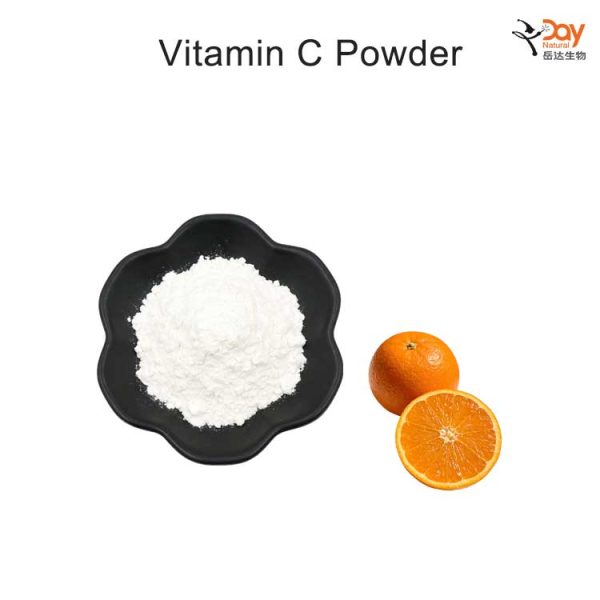
Bulk Vitamin C powder
Vitamin C is a water-soluble vitamin essential for the human body. It has antioxidant properties and can promote the synthesis of collagen, enhance immunity, and is widely found in fresh fruits and vegetables.
| Product Name | Vitamin C (Ascorbic Acid) |
| Appearance | White or almost white crystalline powder or colourless crystals |
| CAS No. | 50-81-7 |
| Specification | 99% |
| Analysis Standard | BP/USP/FCC/EP/E300, Food Grade |
| PH (5%,W/V) | 2.1~2.6 |
| Specific rotation | +20.5°~+21.5° |
| Solubility | Freely soluble in water, sparingly soluble in 96% ethanol, insoluble in chloroform |
| Storage | Moisture-proof, heat-insulating, light-shielding and air-sealing |
- 25 Years Manufacturer
- Customized Formula
- Premium Quality
- Worldwide Shipping
- Timely Delivery
What is Vitamin C?
Vitamin C (also known as ascorbic acid) is a water-soluble vitamin that is essential for the human body. It has the following core characteristics:
Necessity
The human body cannot synthesize it on its own; it must be obtained through food (such as fresh fruits and vegetables) or supplements.
Key functions
Strong antioxidant: Protect cells from free radical damage, delay aging.
Promote collagen synthesis: Maintain the health of skin, gums, and blood vessels, and help with wound healing.
Enhance immunity: Promote the activity of white blood cells, help resist infections.
Promote iron absorption: Assist in preventing iron deficiency anemia.
Consequences of deficiency
Severe deficiency can lead to scurvy (such as bleeding gums, joint pain, etc.).
Application
Food-grade vitamin C has three main core applications in the food industry:
As a nutrient fortifier to supplement vitamins, as an antioxidant to prevent food from spoiling, and as an improver to enhance the processing performance and appearance of food.
For its specific applications and main functions, please refer to the following table:
| Application Category | Main function | Examples of common application scenarios |
| Nutritional fortification | Replenish the lost vitamin C in the food | It can be added to infant food, milk powder, fruit and vegetable juice beverages, candies, etc., or used to make vitamin C functional gummies. |
| Antioxidation and Color Protection | By taking advantage of its strong reducing property, it consumes the oxygen in food, preventing discoloration, deterioration in taste and loss of nutrients caused by oxidation. | – Meat products: Helps color development in ham and sausage, and inhibits the formation of nitrosamines.
– Fruit and vegetable products: Prevents browning of fruit canned products and juice. – Beer/drink: Prevents oxidation to maintain fresh flavor. |
| Quality improvement | As a flour conditioner, it improves the processing performance of the dough, resulting in larger finished product volume and better texture. | It is added to fermented food products (such as bread and steamed buns), and the dosage is usually 0.2g per kilogram. |
Which foods contain vitamin C?
Foods rich in vitamin C mainly come from fresh fruits and vegetables. Specifically, the following foods are included (listed in order of content in milligrams per 100 grams of edible part):
- Mulberry (about 2585 milligrams)
- Winter jujube (about 243 milligrams)
- Pomelo (about 228 milligrams)
- Colorful peppers (red/yellow sweet peppers, about 130-170 milligrams)
- Dark green leafy vegetables such as kale or spinach (about 70-150 milligrams)
- Kiwi (about 62 milligrams)
- Hawthorn (about 53 milligrams)
- Broccoli (about 56 milligrams)
- Strawberries (about 47 milligrams)
- Papaya/Litchi (about 40-50 milligrams)
- Citrus fruits: oranges, tangerines, lemons (about 20-40 milligrams)
- Common fruits: pineapples, mangoes, melons
- Common vegetables: tomatoes, Chinese cabbage, spinach (some nutrients may be lost during cooking)

Reviews
There are no reviews yet.