Ginseng Extract: Ginsenosides, Standardisation and Root vs Leaf
Ginseng is the most commercially mature botanical in the supplement category and one of the most difficult to buy well. The name covers several distinct species, several plant parts, two processing routes that produce genuinely different chemistry, and a standardisation vocabulary that is frequently used more loosely than it should be.
A specification that says “ginseng extract 80% ginsenosides” is a starting point, not an answer. What matters beyond the number is which species, which plant part, which processing route, and — critically — which individual ginsenosides the assay is summing.
Species and plant part come first
Panax ginseng, Asian or Korean ginseng, is the most widely traded species, and its root is the conventional raw material. Panax quinquefolius, American ginseng, has a distinct ginsenoside profile, and it is regulated as a native species in parts of North America, which affects sourcing legitimacy. Panax notoginseng offers a different profile again and is traded largely for its own traditional uses. The fourth source is Panax ginseng leaf and stem, sold as ginseng leaf extract, a materially cheaper raw material whose ginsenoside profile differs from that of the root.
That last point deserves emphasis. Ginseng leaf extract is not a substitute for root extract. It is a legitimate material in its own right, widely used because it is considerably cheaper and available in larger volumes, but its ginsenoside composition differs — both in the total content achievable and in the ratio between individual compounds. If your specification and your label refer to ginseng root, leaf material does not satisfy them. Ask for the plant part in writing and check it against the botanical declaration on the certificate of analysis.
For American ginseng in particular, buyers in North America should be aware that harvest and trade of wild Panax quinquefolius is regulated, and provenance documentation is a reasonable expectation rather than an unusual request.
White versus red ginseng: a processing difference, not a marketing one
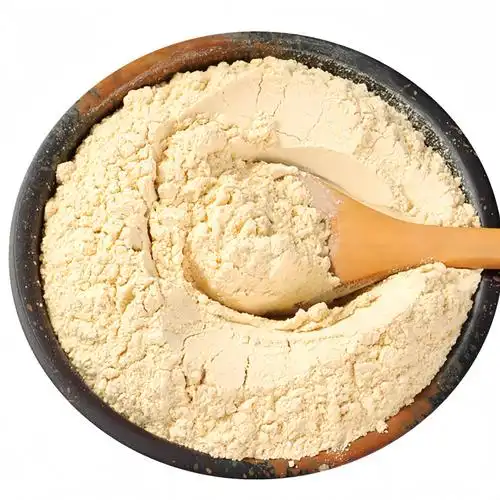
The difference is caused by steam treatment. White ginseng is dried without steaming, which leaves it a light, yellowish-white colour; its characteristic ginsenosides are the native ones, including Rb1, Rb2, Rc, Rd, Re and Rg1, and its flavour is milder and more neutral.
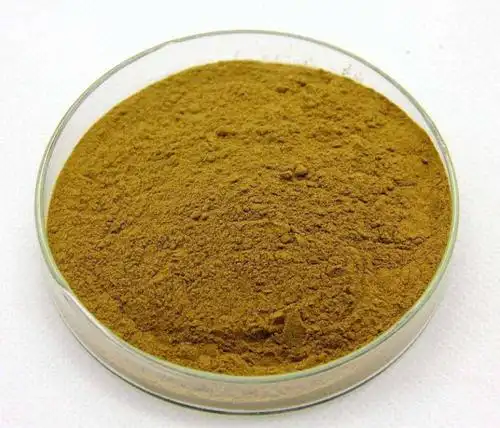
Red ginseng is steamed and then dried, which turns it a reddish-brown. The steam treatment drives partial transformation of the ginsenosides, producing elevated levels of compounds such as Rg3, Rh1 and Rh2, and it gives the material a distinctly different flavour with a cooked, slightly bitter character.
The practical implication: Rb1, Rg1 and Rg3 are not alternative names for the same thing, and they are not present in the same proportions in the two products. A formulation positioned around a specific ginsenoside profile needs the correct processing route, not just a high total ginsenoside figure. A specification written on total ginsenosides can be satisfied by either product, which is exactly why the total figure alone is insufficient when the processing route matters to the product story.
The standardisation question
An extract ratio product carries a ratio only, commonly written as 10:1, which suits cost-driven and traditional positioning but leaves marker content highly variable, so it is unsuitable where a defined dose is claimed.
A standardised total ginsenoside grade, commonly at 20%, 40% or 80% by UV or HPLC, is the mainstream supplement grade. Here the method matters enormously, because UV-based and HPLC-based figures are not directly comparable.
An individual ginsenoside standardised grade targets specific compounds, such as Rg1 plus Rb1 or Rg3 alone, and belongs in premium and differentiated products; it requires an HPLC method that actually resolves the individual compounds. A purified single ginsenoside grade goes further, offering a high-purity single compound for niche, research-oriented and specialised premium applications at very high cost, where purity and identity data need to be verified rather than assumed.
Two checks resolve most specification disputes before they happen. The first is to ask for the method, because a UV-based total ginsenoside assay and an HPLC-based assay summing individual compounds can produce different numbers on the same material, and comparing quotations built on different methods is comparing nothing. The second is to ask for the individual profile: total ginsenosides tell you how much of the group is present, while the individual profile tells you which, and where the formulation depends on a particular compound only the second is informative.
Physical form and application fit
Ginseng extract is strongly hygroscopic in many grades and carries a pronounced, distinctive taste — bitterness and a characteristic earthy, sometimes medicinal note — that limits dose in consumer-friendly formats.
A standardised powder suits capsules, tablets and dry blends, where the issues to manage are hygroscopicity, caking and flowability on high-speed lines. A water-soluble powder suits sachets, stick packs and instant beverages, where dissolution time and taste-masking requirements need confirming first.
A liquid extract suits beverages, liquid fills and shots, and shifts the specification towards stability, colour drift and the preservative system. An oil suspension or lipid-compatible grade suits softgels, where sedimentation and assay uniformity are the parameters that decide whether the fill is consistent.
Taste is usually the binding constraint in beverage formats, not solubility. A ginseng drink is limited by how much bitterness the consumer will accept, so the taste trial belongs early in development rather than at the end.
Specification checklist
On identity and assay, require the species declared — Panax ginseng, P. quinquefolius or P. notoginseng — the plant part declared as root, root and rhizome, or leaf and stem, the processing route declared as white and non-steamed or red and steamed, and the total ginsenoside content with the analytical method named, whether UV or HPLC, together with the reference standard used. Require the individual ginsenoside profile including at minimum Rb1 and Rg1 and, where relevant, Rg3; the basis stated as as-is or dry; and the extraction solvent declared.
On physical properties, require solubility and dissolution behaviour in the intended medium; hygroscopicity and moisture content with a water activity figure; particle size distribution and flowability for blended, filled or tableted applications; bulk density; and a colour-space reading where appearance matters.
On safety, require a heavy metals panel with its method, typically ICP-MS, because root crops accumulate soil minerals and this is a substantive requirement rather than a formality. Require a pesticide multiresidue screen with panel size and detection limits disclosed, since ginseng is a high-value root crop with a well-documented cultivation input profile. Require a mycotoxin panel covering aflatoxins, total and B1, and ochratoxin A; a residual solvents statement against a recognised classification; a microbiological profile with limits for total plate count, yeast and mould and the specified pathogens; and PAH and radiation-treatment statements.
On compliance and stability, require allergen and GMO statements; organic, Halal and Kosher certificates with product-name scope where claimed; provenance documentation for regulated species; real-time stability data for potency and physical form; and the recommended packaging and storage conditions, including the barrier requirements that hygroscopic grades demand.
Dose and label arithmetic
The recurring error in this category is writing the label in one ginsenoside basis and the specification in another — most commonly a total-ginsenoside specification satisfied by a material whose individual profile does not match the product’s positioning.
Three disciplines are worth adopting. The first is to fix the basis in writing across the specification, the artwork brief and the stability protocol at the same time. The second is to require the individual profile on every lot, not only at qualification, because the profile is the parameter most likely to drift when a supplier changes raw material source. The third is to build overage from measured stability data, particularly for hygroscopic powders where moisture uptake degrades the material faster than temperature does.
Cost and sourcing notes
Three factors dominate landed cost in this category: species, plant part and standardisation level. The spread between a leaf-derived standardised product and a root-derived high-purity grade is large enough that the two are not truly competing products — they serve different briefs.
Two procurement measures are worth putting in place. Qualify two sources across at least two origins, because ginseng is a high-value agricultural material with a seasonal harvest and well-documented supply volatility. And retain a sealed sample per lot: where the individual ginsenoside profile is part of your specification, a retained sample is what allows a dispute to be resolved against a documented baseline rather than an argument.
Frequently Asked Questions
Is leaf extract as good as root extract?
They are different materials with different ginsenoside profiles, and the difference is not simply one of degree. Leaf material is legitimate, cheaper and widely used, but it does not satisfy a specification written for root extract. Match the material to the specification and the label.
White or red ginseng — which should I specify?
They differ in processing and consequently in ginsenoside profile, with steam treatment producing elevated levels of certain transformed compounds. The choice follows from what the formulation and the label claim are built around, not from a general preference.
Why do two suppliers give different ginsenoside percentages for similar material?
Most often because the assays differ — UV-based total ginsenoside figures and HPLC-based sums of individual compounds are not directly comparable. Ask for the method and the reference standard before comparing numbers.
What is the biggest quality risk?
Heavy metals and pesticides, because ginseng is a high-value root crop grown over multiple seasons, and mycotoxins because roots are stored. All three belong in the routine certificate of analysis rather than in a one-off qualification test.
Can ginseng extract be used in a clear beverage?
Water-soluble grades can be, but taste rather than solubility is usually the constraint. The bitterness and characteristic note limit the dose, so taste trials should run early. Where clarity is required, verify that the water-soluble grade does not produce haze over shelf life.
Source ginseng extract from DayNatural
DayNatural supplies ginseng root extract standardised for total ginsenosides and for individual compounds including Rb1, Rg1 and Rg3, with the analytical method and plant part stated on every specification, and full documentation verified through our Mérieux NutriSciences testing programme.