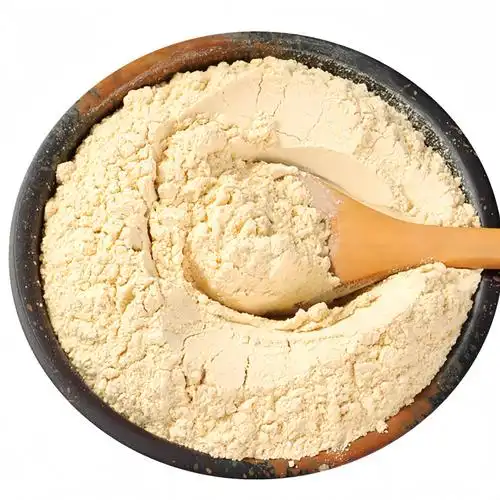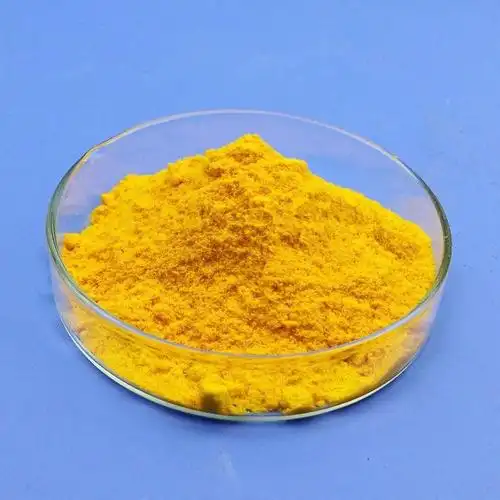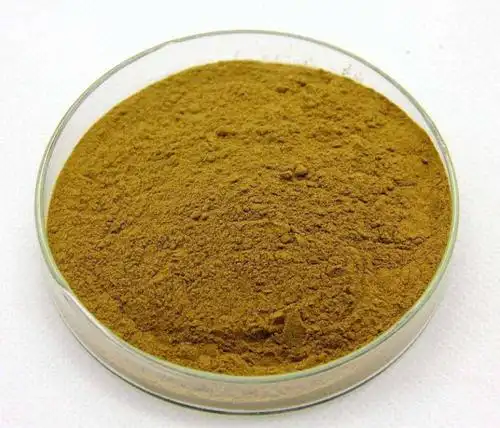
Natural Beta-Carotene: Comparing Fermentation, Algae and Palm Sources
Beta-carotene is one of the most widely used ingredients in the industry and one of the most confusing to buy. It is simultaneously a colourant, a nutrient and a raw material with three genuinely different commercial production routes — and the route determines the isomer profile, the colour behaviour, the carrier system and, in some markets, the way the ingredient must be declared.
Buyers who compare only on price per kilogram of β-carotene content routinely end up with a material that performs differently in application than the sample they approved. This guide sets out what actually differs.
The three commercial routes
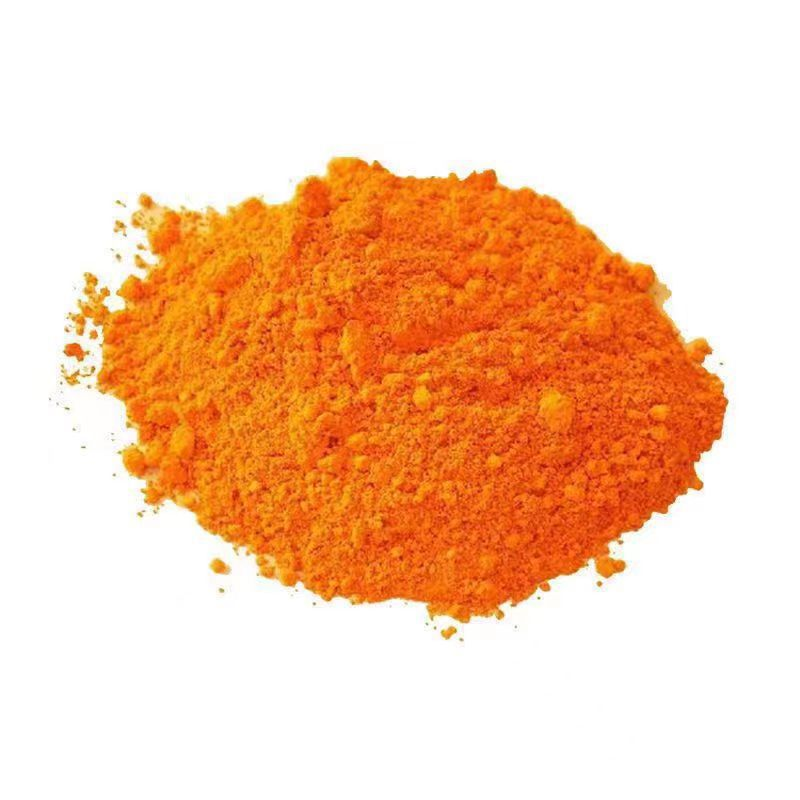
Fermentation with Blakeslea trispora runs a fungal fermentation followed by extraction and purification, which makes it the dominant naturally produced route and one well suited to large-volume supply; quality is consistent and supply is controllable, it is listed as a colour additive in some markets, and it contains a mixture of isomers rather than pure all-trans. Algae, specifically Dunaliella salina, means cultivating a halophilic microalga and extracting the carotenoid, and it is positioned as an algal-natural origin, often bought for premium and clean-label programmes; it is naturally rich in carotenoid mixtures including minor carotenoids, but it costs more and its supply is seasonal and capacity-limited. Palm-derived material is extracted from palm oil and its fractions, a large-volume route tied to the palm supply chain: highly cost-effective, but the palm origin is a sustainability consideration for some buyers and is not always a fit for premium positioning. Synthetic material, produced by chemical synthesis, is the lowest-cost route by a large margin and is predominantly the all-trans isomer at very high purity, but it cannot be described as natural.
The practical framing: fermentation is the workhorse, algae is the premium story, palm is the cost route. Synthetic is the benchmark you are being asked to pay a premium against, and it is worth knowing what that benchmark costs before negotiating.
Isomer profile, and why it matters more than purity percentage
Carotenoids exist as geometric isomers, and the naturally produced routes contain a mixture of trans and cis forms, whereas synthetic material is heavily weighted toward the single all-trans isomer. That difference shows up in three places. It affects colour, because the isomer mixture changes hue and colour intensity per unit weight, so two materials with the same stated β-carotene content can deliver visibly different colour at the same dose. It affects stability, because cis isomers behave differently under heat and light than the all-trans form. And it affects analytical comparison, because a specification stating “β-carotene 10%” says nothing about the isomer distribution, so two quotations may not be comparable at all.
If colour is the purpose of the ingredient, the isomer profile and the colour-space measurement matter more than the percentage on the label. Ask for both.
Form and carrier: the decision that determines whether it works
β-carotene is oil-soluble and oxidation-sensitive. Almost all commercially useful food-grade material is therefore a formulated dispersion rather than the pure molecule, and the dispersion format determines the application.
An oil suspension, with β-carotene dispersed in a vegetable oil, suits softgels, oil-based fills and lipid-phase food, and the points to control are sedimentation, assay uniformity across the batch and the oxidative stability of the oil itself. A powder on a carrier, usually a beadlet or spray-dried powder standardised to a stated percentage, suits tablets, capsules, dry blends, bakery and confectionery; here the carrier must be declared, and dispersibility and colour strength are what to check. A cold-water-dispersible powder is engineered to form a fine dispersion in water and suits beverages, instant drinks, sachets and dairy alternatives, where the questions are clarity against a cloudy appearance and the way the material rings on the glass. An emulsion or liquid concentrate arrives as a ready-to-use aqueous dispersion for beverage lines, sauces and liquid dairy, and puts the preservative system and shelf-life stability at the centre of the specification.
Three variables decide the outcome in application. The first is carrier choice, because starch, gum arabic, gelatin and modified cellulose carriers behave differently in dry blends, in cold water and under heat — and the carrier is an ingredient on your label, not a processing detail. The second is particle size, because finer dispersions give more colour per unit weight and better suspension while coarser material settles. The third is the protective matrix: β-carotene is destroyed by oxygen and light, antioxidant systems and encapsulation exist to keep it intact through processing and shelf life, and the stability data you ask for should be for the finished form rather than for the molecule.
Colour behaviour in application
β-carotene delivers a yellow to orange hue, and its exact appearance depends on concentration, carrier and the matrix. At low doses it reads as a clean yellow, which is why it is so widely used to standardise the colour of juices, dairy alternatives, baked goods and confectionery; at higher doses it moves through orange toward a deeper orange-red. In fat-based systems the colour is often more intense and more stable, while in water-based systems an emulsified form is required and stability depends on the quality of that emulsion. Above all, it is a colourant before it is anything else: in a pale matrix, β-carotene will dominate the appearance, which is either the point of the product or a problem to be solved.
Two formulation notes are worth acting on. Vitamin C and light exposure both accelerate carotenoid loss, and metal ions from equipment or from mineral-fortified blends can promote oxidation. Test the complete formula, not the ingredient alone.
Regulatory status is not uniform
This is where a natural-origin claim and a colour-additive permission can diverge, so it belongs at the start of the project. In the United States, β-carotene is a listed colour additive with an established regulatory basis, and β-carotene produced by fermentation with Blakeslea trispora has its own listing; the permitted use conditions in the listing apply, so check the current text rather than assuming blanket permission across all food categories. In the European Union, β-carotene is addressed as a colour additive within the additive framework, which distinguishes between the synthetic and plant-derived forms; permitted use conditions are set by food category, and where the ingredient is used as a colourant the additive rules apply rather than the general food rules.
Nutrition labelling is a separate question again: β-carotene is a vitamin A precursor, and how it may be declared in nutrition labelling, and whether a vitamin A contribution claim is permitted, differs by market and by whether the product is a food or a supplement. Other markets, including ASEAN, the Gulf and Latin America, each maintain their own permitted lists and use conditions.
One practical consequence: the same material can be a colour additive in one market and a food ingredient in another. That changes the permitted categories, the use levels and the label declaration. Decide the market first.
What to verify on the specification
On identity and assay, require the production route — fermentation, algae, palm or synthetic — with the botanical or microbial source named, the total β-carotene figure with its method and basis, and the isomer profile wherever colour is the purpose. On colour, form and physical behaviour, require a colour-space reading in L*, a* and b* together with a colour strength figure where one is available, the presentation type and carrier system with a full ingredient declaration, and the particle size distribution alongside dispersion behaviour in the medium you actually intend to use. On stability, require retention data for the finished form under real storage conditions and in the intended matrix. On safety, require heavy metals with their method, a pesticide multiresidue screen particularly for the algal and plant routes, a residual solvents statement and a microbiological profile. On compliance, require allergen, GMO and radiation-treatment statements, organic, Halal and Kosher certificates with product-name scope where they are claimed, and the country of origin.
Cost, and how to compare quotations properly
β-Carotene quotations are frequently issued on different bases — sometimes as percentage of the formulated powder, sometimes as content of the oil suspension, sometimes as pure molecule equivalent. Before comparing numbers, normalise every quotation to three things: the β-carotene content on a stated basis, meaning the percentage of the material as delivered; the dose required to reach a defined colour or nutrition target in your matrix, measured in your own process; and your real overage, derived from stability data at your commercial packaging. Then add the non-ingredient costs: carrier and declaration implications, label review, the stability programme, and the packaging requirements that a light- and oxygen-sensitive material brings with it.
Frequently Asked Questions
Is naturally produced beta-carotene more expensive than synthetic?
Yes, generally by a considerable margin, and the gap widens for algal-origin material. The premium buys a natural-origin claim and, for some buyers, a different isomer profile. Whether that is worth the cost is a positioning decision, and it should be made before the sourcing decision.
Which form should I choose for a beverage?
A cold-water-dispersible powder or a ready-to-use emulsion. An oil suspension will not disperse in an aqueous beverage. Confirm the clarity expectation for your product first, because dispersible forms vary from transparent to noticeably cloudy.
Why does my product’s colour fade over shelf life?
Carotenoids are oxidised by light and oxygen, and the loss accelerates in the presence of vitamin C and metal ions. Move to light-blocking packaging, reduce headspace oxygen, check for metal contact in the process, and require stability data on the finished form rather than on the pure molecule.
Can I describe the ingredient as natural?
Only if the production route supports the claim in your market. Fermentation-derived and algal-derived material is generally positioned as naturally produced, while synthetic material cannot be described as natural. Confirm the claim wording with your regulatory team.
What is the most common reason a sample performs differently in production?
The dispersion system, not the β-carotene content. Two materials at the same stated content can differ substantially in particle size, carrier and colour strength, and those differences become visible at scale. Always approve a sample after a trial at your own process conditions.
Source beta-carotene from DayNatural
DayNatural supplies natural β-carotene in oil suspension and powder forms, standardised for content and available as cold-water-dispersible grades, with full documentation covering assay, colour, stability and compliance, verified through our Mérieux NutriSciences testing programme.