Natural Red Food Colourants: Choosing Between Betalains, Carmine, Paprika and Lycopene
Red is the hardest colour to move to a natural system, and it is the one where the difference between the available options matters most. Where blue has two workable routes, red has at least five, and they are not variations on a theme — they belong to different chemical families with different behaviour across pH, heat and light. The choice made at the concept stage usually determines which categories the product can enter at all. This guide compares the families on the axes that actually decide formulation, and sets out what to fix before the artwork is designed.
What “natural red” can mean
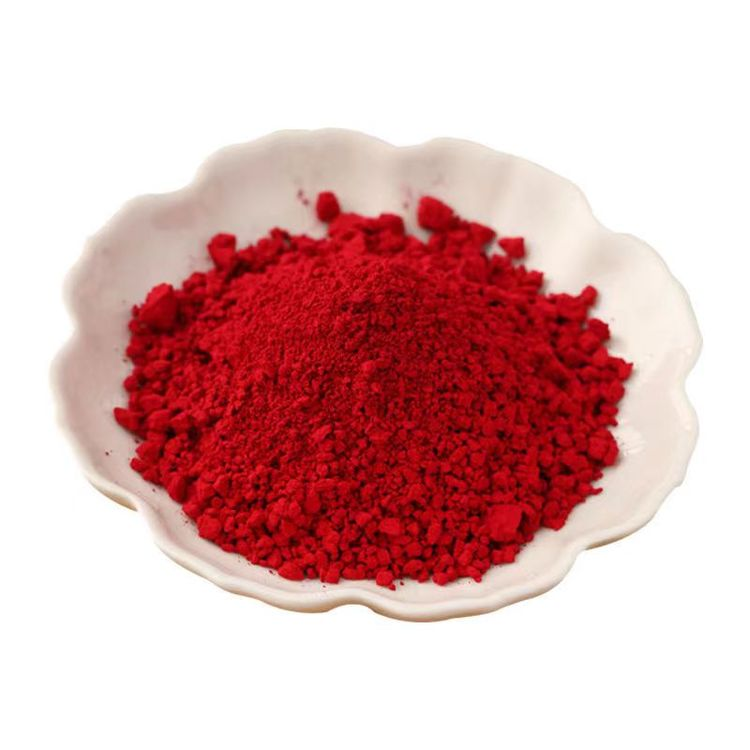
The first thing to establish is that a natural red is not a single substance with substitutes. The materials sold as natural red fall into distinguishable families, and the family determines the answer to every following question.
Betalains, chiefly betanin from beetroot, produce a bluish-red to pink tone. They are water-soluble, they hold up in acidic to mildly acidic systems under short heat exposure, and they are sensitive to heat and to oxygen over long exposure, which is what rules them out of a long shelf life at high temperature. Their practical appeal is a clean label: beetroot red is easy to declare.
Carminic acid, extracted from cochineal insects, produces a bright, stable red with good heat and light resistance, and holds its colour across a broad pH range. It is the benchmark for stability in the natural set, and its constraint is origin rather than chemistry: it is animal-derived, which affects vegetarian, vegan, Halal and Kosher positioning, and in some markets it carries specific labelling obligations.
Capsanthin and related carotenoids from paprika and tomato produce an orange-red to red tone, are oil-soluble, and are supplied as oleoresins or as water-dispersible powders. They are the family that holds up in oil-based and emulsified systems, they are sensitive to oxidation and light, and they contribute flavour as well as colour, which is either a problem or a feature depending on the application.
Lycopene produces a deep tomato-red tone, is oil-soluble, and is highly sensitive to oxidation and light, which makes oil-based systems and opaque formats its natural home. Its colour strength per unit weight is lower than the alternatives in many applications, and it is best suited to systems where its own flavour profile and its label story are welcome.
Anthocyanins from berries, grapes, red cabbage, purple carrot and similar sources produce red in acidic conditions and shift towards purple and blue as pH rises; they hold up in acidic beverages and confectionery and are unstable at neutral pH. They are water-soluble and contribute their own colour behaviour across a beverage range, which is covered in the guide to natural blue colourants and applies symmetrically here.
pH is the first axis, and it eliminates options quickly
Before anything else, plot the product’s pH, because it removes families from consideration faster than any other variable. Anthocyanins are the clearest case: they are red in acid and shift hue as pH rises, so a product whose pH drifts, or a beverage buffered near neutral, will not hold the intended red. Betalains work in acidic and mildly acidic systems and are less pH-sensitive than anthocyanins within that range, but they are not a solution for a neutral or alkaline product. Carminic acid holds its colour across a wide pH range, which is a large part of why it remains in use despite its origin constraints. Carotenoid colours are oil-soluble and are largely indifferent to aqueous pH, which is why they are formulated as emulsions or dispersions rather than dissolved in the water phase. The practical rule is to fix the pH of the finished system and the tolerance around it before choosing a colourant, not after, because a specification written for a target hue without a pH range is incomplete.
Heat, light and oxygen: the second and third axes
The second axis is the thermal process the product will receive, and the third is the light and oxygen exposure during shelf life. Carminic acid is the most robust of the group across heat and light and is the default where a long ambient shelf life is required. Betalains degrade with prolonged heat and with oxygen exposure, which makes them a better fit for short-shelf-life, chilled or dry applications than for a retort or a long ambient liquid. Carotenoids and lycopene oxidise, and their degradation is visible as fading and as a shift towards yellow-brown; the controls are the usual ones — antioxidants where permitted, nitrogen or vacuum handling, opaque or light-protective packaging, and a lower storage temperature. Anthocyanins are generally the most light-sensitive and are also subject to degradation accelerated by ascorbic acid and by metal ions, which matters in fortified beverages.
Two consequences follow for development. The first is that a colourant that performs in an accelerated study can still fail in a slower real-time study, because the degradation routes differ. The second is that packaging is part of the colour system: a clear bottle is a different formulation decision from an opaque one.
Form, and why the same colourant behaves differently
Most of these families are available in more than one physical form, and the form often decides whether the colourant works in the intended application. A water-soluble powder disperses in a beverage but can ring the container or settle. An oil-soluble oleoresin delivers colour into a fat phase and is unsuitable for a clear aqueous system without emulsification. A water-dispersible powder, produced by emulsifying the oil-soluble colour onto a carrier, extends a carotenoid colour into beverages at the cost of turbidity and of a carrier that must appear in the declaration. A liquid dispersion is convenient for dosing but carries its own stability and microbial considerations.
For a clear beverage, the options narrow to the water-soluble families; for a cloudy or opaque system, the water-dispersible carotenoid and lycopene forms become available; for a fat-based application, the oil-soluble forms are the natural choice. Matching form to system early avoids the common situation where a colourant chosen for its tone turns out not to be dispensable in the intended medium.
Labelling and consumer perception
Natural colourants are not outside the labelling conversation, and in one case the origin is the issue rather than the chemistry. Carmine requires attention in three directions: it is animal-derived, so it is excluded from vegetarian and vegan claims; it may affect Halal and Kosher status depending on the certifying authority’s position; and it carries a specific labelling obligation in some markets, including an allergen-style declaration in certain jurisdictions. Where a brand is positioning on plant-based or on a specific certification, this is a decision to settle before development rather than at label review.
For the plant-derived families, the questions are about the form of the declaration. A beetroot-derived colour may be declared as a colour or as a food ingredient depending on the preparation and the market, and the wording changes what the ingredient statement looks like to a consumer reading it. Carotenoid preparations may contribute provitamin activity and therefore a nutrition panel entry, which is another reason to confirm the destination’s labelling rules rather than assuming. The regulatory position of each material — permitted categories, maximum levels, and labelling — is destination-specific and changes over time, so confirm the current text for the market you are selling into before finalising a formulation.
Matching the family to the application
Four application patterns cover most of the decisions. In confectionery, carminic acid and betalains are the common choices, with the selection driven by shelf life and by the vegetarian question rather than by stability alone. In beverages, pH decides first: acidic systems can use anthocyanins, betalains or a water-dispersible carotenoid, while neutral systems push towards carminic acid or towards a carotenoid dispersion.
In bakery and extruded snacks, thermal load and the effect of the matrix on hue dominate, and carotenoid colours integrate naturally with fat-containing recipes. In plant-based meat alternatives, colour is often expected to change on cooking, and the systems used are frequently combinations rather than single colourants — which is also the general lesson: where one family cannot deliver both the target tone and the required stability, a blend that combines a stable base with a hue-correcting component is the normal solution. Dosage belongs in the same conversation, because natural colourants typically require a higher use level than the synthetic colours they replace, both because their colour strength per unit weight is lower and because their hue is less pure. The replacement should therefore be planned as a formulation change rather than as a one-for-one substitution, with the effect on taste, texture, turbidity and cost all examined at the same time.
What to write into the purchase specification
State the colourant family and the source material, not only the commercial name. State the colour strength or the content of the principal pigment, and the method by which it is measured, since a colour value and a pigment content are different figures. State the physical form and the carrier or diluent. State the solubility or dispersibility in the intended medium.
State the pH range and the thermal process the material has been tested against, and require the supporting data. State the certification status relevant to your market — vegetarian, vegan, Halal, Kosher, organic — and the labelling consequence the supplier expects. And state the storage conditions and shelf life, because these colourants fail in storage before they fail in the product.
Frequently Asked Questions
Which natural red is the most stable?
Carminic acid is the most robust of the commonly used families across pH, heat and light, which is why it is retained in demanding applications despite being animal-derived. Among plant-derived options, carotenoid-based colours are the more heat-stable, and betalains are the more pH-forgiving within the acidic range.
Is carmine suitable for vegetarian or Halal products?
It is animal-derived, so it falls outside vegetarian and vegan claims, and its acceptability under Halal and Kosher certification depends on the position of the certifying authority. Where those claims matter, the decision belongs in the concept stage, and a plant-derived alternative should be tested against the same stability requirements.
Can beetroot red be used in a clear beverage?
It can be used in acidic beverages, but it is water-soluble and will colour the liquid rather than remain clear, and its heat and oxygen sensitivity limits the shelf life it will support. For a clear, long-shelf-life product, the realistic options are narrower and usually involve a different family.
Why does my anthocyanin colour change in the bottle?
Because anthocyanins are pH-dependent: they are red in acid and shift towards purple as pH rises, so a small drift is a visible change. Other factors compound it — light exposure, ascorbic acid and metal ions all accelerate degradation in beverages.
Do natural colourants need a higher dose than synthetic reds?
Generally yes. Their colour strength per unit weight is lower and their hue less pure, so the replacement is a formulation exercise rather than a substitution. Plan for the effect on taste, turbidity, texture and cost at the same time as the colour match.