Lycopene for Food and Supplement Formulation: Sources, Grades and Process Stability
Lycopene is one of the more deceptive ingredients on a specification sheet. The headline number — 5%, 10%, 20% — describes how much lycopene is present, but almost nothing about whether it will still be there after your process, or whether it will disperse into your matrix without speckling.
Three variables drive almost every practical problem buyers run into: where the lycopene came from, which geometric form it is in, and how it has been carried into a deliverable ingredient. This guide works through all three, then covers what to verify on a certificate of analysis.
Where the lycopene comes from
There are three commercial routes, and they are not interchangeable. Tomato-derived lycopene is extracted from tomato fruit or from tomato processing by-products and then standardised; it supports clean-label and natural-source positioning in food, beverage and supplements, but its supply follows the tomato harvest cycle, so price and availability move with crop volumes. Fermentation-derived lycopene is produced by microbial fermentation of a defined carbon source and then standardised; it suits cost-efficient, high-volume applications and offers consistent supply throughout the year, and it is declared as nature-identical in most markets, where the label declaration rules differ from those that apply to tomato-derived material. Synthetic lycopene is produced chemically and used broadly in food colouring applications in the markets that permit it — of the three routes, its regulatory status is the most market-specific.
Two consequences follow. First, the label declaration is a procurement decision, not a marketing one. A product marketed on a tomato-sourced claim cannot be switched to a fermentation-derived material without changing the label. Establish the permitted source before you negotiate price, because once a formulation is approved on one route, switching is a relabelling project. Second, natural-source supply is seasonal. Tomato-derived lycopene availability tracks the harvest, so buyers planning a full year of production should contract volumes ahead of the season rather than buying spot, and should confirm whether the supplier holds stock or buys against orders.
The isomer question most specifications omit
Lycopene exists as geometric isomers — predominantly all-trans in fresh tomato, with cis-isomers formed during heating, processing and storage. The ratio matters for two reasons: cis-isomers behave differently in oil-based systems, and the isomer profile is a useful fingerprint of how the material was processed.
In practice this leads to three working rules. Ask for the isomer ratio whenever it affects your claim or your application — not every project needs it, but in oil suspension and emulsion systems, an extract with a higher cis share can behave differently in colour development and dispersion from one that is almost entirely all-trans. Treat the reported ratio as an indicator of process control, because a supplier who cannot state the isomer profile is unlikely to be controlling extraction and drying conditions tightly. And do not assume that “natural” means “all-trans”: heat is applied in most commercial extraction routes, and isomerisation follows.
Physical form: powder, beadlet or oil suspension
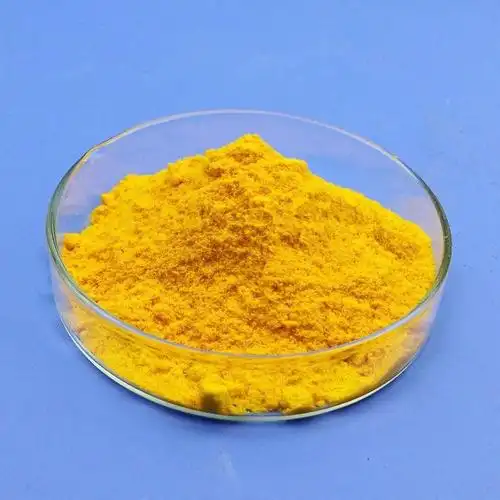
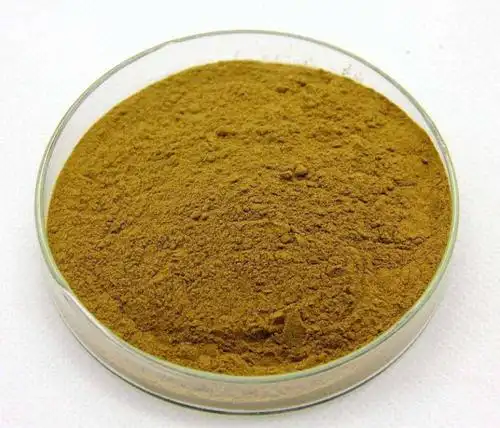
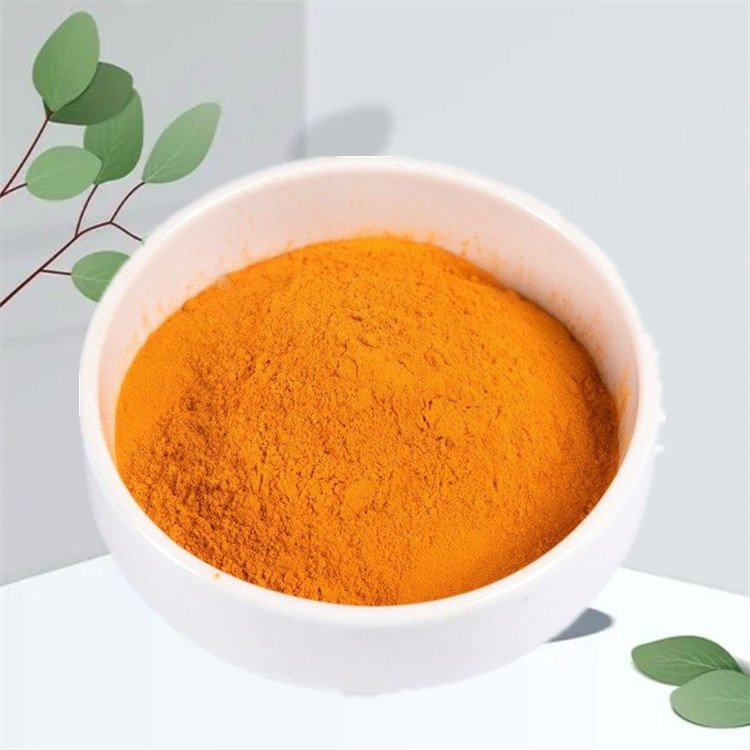
Physical form is where most formulation failures originate, and it is decided by the carrier rather than by the lycopene itself. A cold water dispersible powder carries lycopene absorbed onto a carrier, often with an emulsifier, and suits dry mixes, stick packs, solid beverages and tablets; what to watch is reconstitution behaviour, specifically whether specking appears when the powder is dissolved. A beadlet or microencapsulated grade encloses lycopene in a protective matrix and is used in tablets, capsules and powders that need oxidative protection; the variables that matter there are the particle size distribution and the degree of protection the matrix actually provides against heat and oxygen during processing.
An oil suspension disperses lycopene in a vegetable oil base and is used in softgels, oil-based foods and dressings, where the considerations are cold-chain sensitivity and the fact that it is easier to overdose into a blend than to disperse evenly. A water-soluble or emulsion form is a formulated emulsion used in beverages, clear or cloudy, where the practical concerns are turbidity over shelf life and the emulsifier declaration.
For solid beverage and stick-pack applications, the practical test is simple: disperse a sample in water at your intended use level and look at the surface. Undissolved lycopene particles or an oil film at the top will be visible immediately, and this is far cheaper to find at sample stage than after a production run.
Stability: what actually degrades lycopene
Lycopene is a highly unsaturated molecule and reacts to the same three stresses as other carotenoids. Oxygen is the primary degradation pathway, and oxidation is accelerated by heat, by light and by trace metals such as iron and copper from equipment; where a formulation uses metal contact equipment, ask whether the material is stabilised and confirm the antioxidant content. Light is relevant especially to clear packaging and retail display — if the product sits in a transparent pouch or bottle, the duration of light exposure is a shelf-life variable and should be tested rather than assumed. Heat is applied by extrusion, spray drying, high-temperature short-time processing and coating; where a process step exceeds roughly the temperature range the material was designed for, expect measurable loss, and verify it by assaying before and after your process rather than relying on the supplier’s general stability comment.
The practical instrument here is a fortification trial: assay the finished product at day zero and at end of shelf life, then calculate overage. This is the only reliable way to know what overage your process requires, and most formulators find that the answer is neither zero nor enormous, but somewhere specific to their process.
What to verify on the certificate of analysis
A lycopene specification worth accepting states its figures in numbers, starting with the assay and the analytical method used, together with the basis it is expressed on — because a percentage alone is ambiguous without knowing whether it is calculated as-is or on a dried basis. It should also carry an isomer ratio or at least a defined trans/cis statement, which describes the material more precisely than the word “lycopene” on its own, and the identity and content of the carrier or excipient, which determines dispersibility, allergen exposure and the label declaration.
Beyond that, four more items belong on every certificate. Residual solvent, where the material is solvent-extracted, is a regulatory requirement in most destination markets. Heavy metals — lead, arsenic, cadmium and mercury — are standard for food and supplement ingredients and are frequently the item that fails an audit. Microbiological limits, notably total plate count and yeasts and moulds for powders, define the material’s fitness for use. Particle size or sieve analysis predicts specking and blend uniformity in powder applications, which makes it more relevant to a specification than its position at the end of the list suggests. Antioxidant and stabiliser content should also be stated, since it explains the shelf-life claim and normally has to be declared.
Regulatory framing
Lycopene is used both as a food colour and as a supplement ingredient, and the two routes carry different regulatory identities in the same market. In the European Union, lycopene is authorised as a food colour (E160d) with permitted sources defined in the authorisation, and the EU also maintains a separate novel food framework; lycopene used as a supplement ingredient falls under the food supplement rules rather than the colour rules. In the United States, lycopene used as a colour follows colour additive rules and specific listings, while as a dietary supplement ingredient it falls under dietary supplement rules — distinct legal routes with distinct documentation requirements. Gulf, ASEAN and Latin American markets set their own permitted lists and maximum levels, which are frequently at variance with the EU and the United States. Always confirm which category your product falls into before selecting a material.
The operational rule that saves the most time is to decide the destination market first, then the regulatory category, then the grade. Choosing a grade first and discovering later that its source is not permitted in your target market forces a material change after artwork approval.
Cost comparisons that mislead
Lycopene is frequently compared on a price-per-kilogram basis, and this produces the wrong answer, because two materials at the same assay can differ significantly in the amount you must add to reach your target in the finished product. What matters is cost per unit of delivered lycopene in the finished goods, including overage. Build that comparison on four inputs: the assay on a defined basis; the overage your process actually requires, measured rather than assumed; the yield loss through your specific process steps; and any declaration or claim implications of the carrier and the source.
Frequently Asked Questions
Is natural tomato lycopene better than fermentation-derived lycopene?
Not on a functional basis — both are standardised to the same assay and are used in the same applications. The difference is commercial and regulatory: tomato-derived supports a natural-source claim and is seasonal in supply, while fermentation-derived offers year-round consistency and is usually declared differently. Choose based on your label and your market’s rules, not on an assumption about performance.
What does “lycopene 10%” actually mean?
It means the material contains 10% lycopene, with the remaining 90% being carrier, emulsifier, antioxidant and processing aids. The specification is incomplete without the method of assay and the basis it is calculated on, because a percentage on an as-is basis and the same percentage on a dried basis are not the same quantity.
Why does lycopene powder sometimes leave specks in a drink?
Almost always a dispersion problem rather than a purity problem. Cold water dispersible grades are formulated with emulsifiers to keep the lycopene dispersed; if the grade was selected for tablets or capsules and used in a beverage, or if the powder was added at the wrong stage of a hot process, particles will remain visible. Test dispersion in water at your actual use level during sampling.
How much overage should I plan for?
There is no universal figure. Overage depends on your process temperature, oxygen exposure, packaging barrier and shelf life. The only sound method is to assay finished product at day zero and at end of shelf life with your own process, then set overage from the measured loss.
Can I use one lycopene grade across tablets and beverages?
Usually not, and trying to is a common source of cost. Tablets and capsules tolerate grades that do not need to disperse in water; beverages require a grade engineered for dispersion and often for clarity. Selecting one grade for both typically means over-specifying for one application and under-performing in the other.